
By David Sher
I want to make this perfectly clear: I am not an enemy of Irondale.
I’m impressed by a small municipality that keeps stacking up economic wins while so much of the rest of Jefferson County struggles.
But that’s exactly the problem.
The 2% Getting 100% of the Windfall
Jefferson County has roughly 665,000 residents spread across 35 municipalities. Irondale has about 13,500 residents— roughly 2% of the county’s population.
That 2% is about to capture the benefits of a $1 billion economic development plan almost entirely on its own.
Irondale recently finalized a development agreement with Costco for a $105 million warehouse and gas station on Grants Mill Road. City leaders expect it to generate $6–8 million a year in new sales tax revenue, on top of 200 to 300 jobs.
To land the deal, Irondale approved a $70 million incentive package, with Costco keeping 88% of certain revenues generated by the project until that incentive is repaid — a process expected to take seven or eight years, after which the city finally gets to keep 100%.
Worth noting: Costco doesn’t need the help. The company posted $8.1 billion in net income last fiscal year. A $70 million incentive is less than 1% of what Costco earned in profit in a single year — real money for Irondale, pocket change for Costco.
One Billion Dollars, One Small City
The Costco deal is just one piece of something much bigger. Irondale is executing what it calls the “Billion Dollar Vision,” a plan to draw $1 billion in cumulative capital investment into the city by 2033.
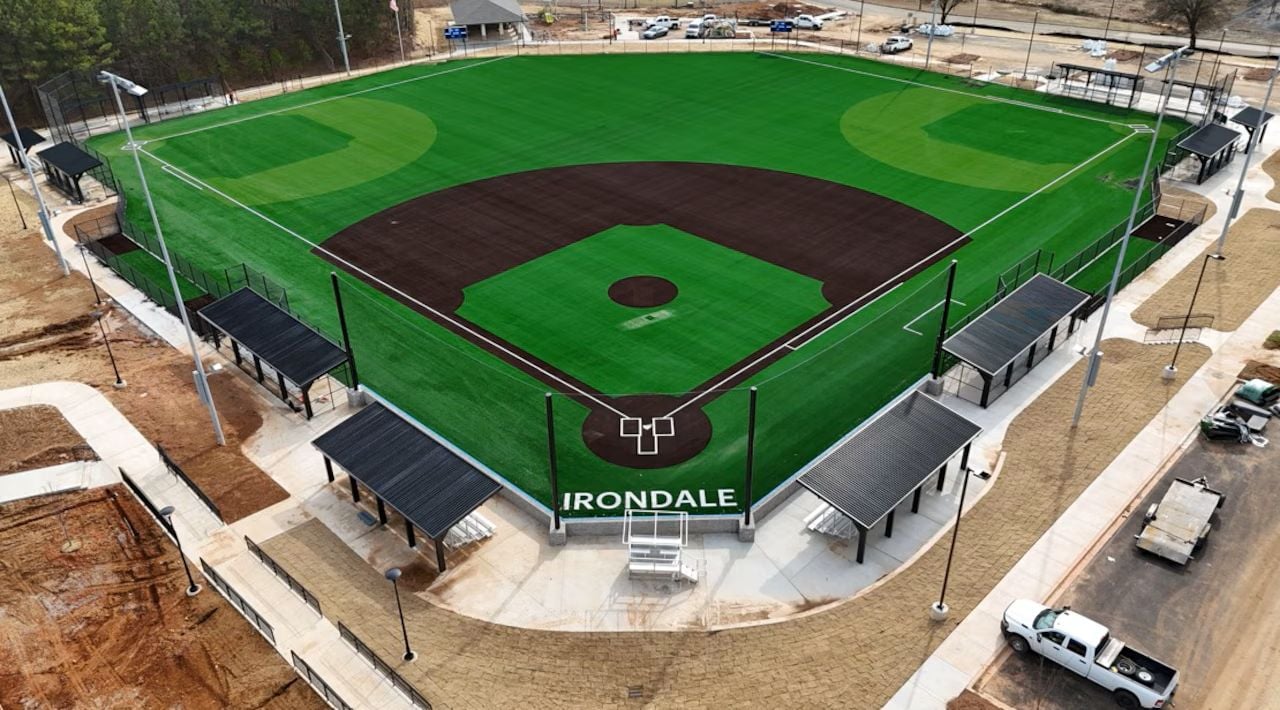
As of last fiscal year, the city already had more than $430 million in active and committed projects toward that goal — a new civic center, a ballpark, a municipal complex, a library, and a shopping center already pulling in 45,000 visitors a week.
The Incentive Tax We All Pay
Here’s the part that should bother every taxpayer in this county, not just the ones outside Irondale. That $70 million incentive package didn’t come out of thin air — it came out of future public revenue that Irondale otherwise would have kept for itself, schools, roads, and services.
Cities offer incentives like that because they’re competing against other cities, including others in this county, for the same handful of retailers and developers. If Jefferson County’s municipalities weren’t bidding against one another — if we approached economic development regionally instead of 35 separate governments racing to out-incentivize each other — Irondale likely wouldn’t have needed to give away nearly as much to win Costco.
That’s real public money, gone before it ever hits a general fund, spent not because the project demanded it but because the competition did.
Good For Irondale. What About Everyone Else?
None of this is illegal or unreasonable on Irondale’s part. Mayor James Stewart has spent years building relationships with retailers and using the city’s location near I-459 to its advantage. That’s good governance, and Irondale residents are right to be proud of it.
But concentrating a billion dollars of development in a city containing only about 2% of Jefferson County’s population does little for the other 98% who live outside Irondale. The sales-tax revenue remains in Irondale, which has already built a new sports complex and library and is now building a civic center.
Those projects may benefit some people beyond the city limits, but they were planned and financed by one municipality rather than as part of a coordinated regional strategy.
Meanwhile, public money that might otherwise have reached local government sooner was used to help Irondale compete for the development—potentially bidding against neighboring communities that are part of the same economy.
To be clear, I’m not proposing we combine our cities into one — I’ve made that case before and I know how that argument lands. This isn’t that. What I’m suggesting is narrower and, I think, less controversial: that our 35 municipalities cooperate on economic development instead of competing against one another for the same companies.
Even Irondale May Not Win The Way It Thinks
There’s a wrinkle even Irondale should consider. Part of what makes a small city attractive to residents is its smallness — lower costs, a leaner bureaucracy, a council that moves fast. If the Billion Dollar Vision succeeds and Irondale grows substantially over the next decade, some of what made it a good place to live may erode along the way.
Bottom Line
To its credit, in 2021 the Jefferson County’s Mayor Association signed a Good Neighbors Pledge agreeing not to not poach existing businesses from one another. Now it’s time for the next step.
Irondale deserves credit for playing the game well.
But as long as our cities keep bidding against each other instead of pursuing growth as one region, we’ll keep paying a premium for wins that don’t reach most of us.
David Sher is the founder and publisher of ComebackTown. He’s past Chairman of the Birmingham Regional Chamber of Commerce (BBA), Operation New Birmingham (REV Birmingham), and the City Action Partnership (CAP).
Care about Birmingham, sign up for ComebackTown newsletter
Invite David to speak for free to your group about how we can have a more prosperous metro Birmingham. dsher@comebacktown.com




Outstanding essay, David! This strikes me as having real potential for everyone. Truly a win-win-win for Irondale, Jefferson Country, and the taxpayers living here. Thanks!
Bucky
Bucky, are you sure you read this carefully? That’s not what I got from this piece…
One bad thing about a large amount of revenue coming into Irondale is they may decide they can afford to launch their own school system. They are already studying this. This would further subdivide our local government leave some children behind.
Did any other municipalities approach COSCO representatives about possible plans for their communities ? The Mayor of Irondale obviously had the leadership skills, creative vision and personality to make it happen. Good for him !