
By David Sher
I want to make this perfectly clear: I am not an enemy of Irondale.
I’m impressed by a small municipality that keeps stacking up economic wins while so much of the rest of Jefferson County struggles.
But that’s exactly the problem.
The 2% Getting 100% of the Windfall
Jefferson County has roughly 665,000 residents spread across 35 municipalities. Irondale has about 13,500 residents— roughly 2% of the county’s population.
That 2% is about to capture the benefits of a $1 billion economic development plan almost entirely on its own.
Irondale recently finalized a development agreement with Costco for a $105 million warehouse and gas station on Grants Mill Road. City leaders expect it to generate $6–8 million a year in new sales tax revenue, on top of 200 to 300 jobs.
To land the deal, Irondale approved a $70 million incentive package, with Costco keeping 88% of certain revenues generated by the project until that incentive is repaid — a process expected to take seven or eight years, after which the city finally gets to keep 100%.
Worth noting: Costco doesn’t need the help. The company posted $8.1 billion in net income last fiscal year. A $70 million incentive is less than 1% of what Costco earned in profit in a single year — real money for Irondale, pocket change for Costco.
One Billion Dollars, One Small City
The Costco deal is just one piece of something much bigger. Irondale is executing what it calls the “Billion Dollar Vision,” a plan to draw $1 billion in cumulative capital investment into the city by 2033.
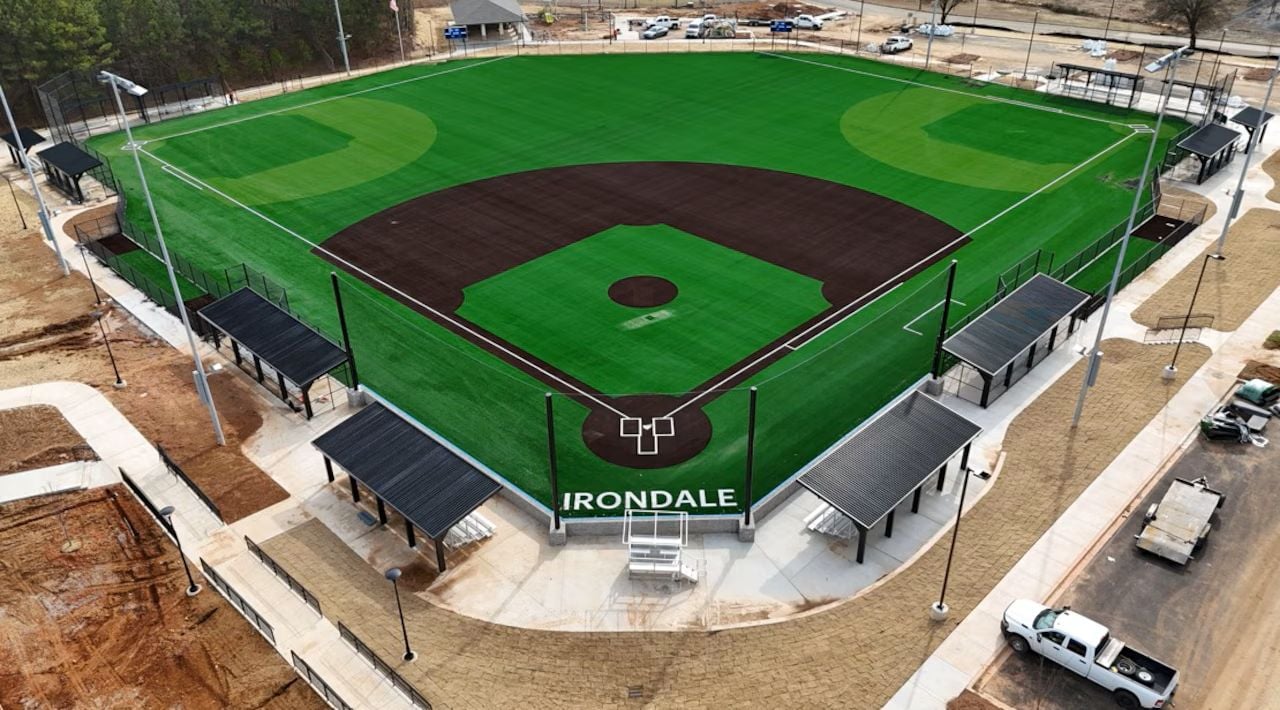
As of last fiscal year, the city already had more than $430 million in active and committed projects toward that goal — a new civic center, a ballpark, a municipal complex, a library, and a shopping center already pulling in 45,000 visitors a week.
The Incentive Tax We All Pay
Here’s the part that should bother every taxpayer in this county, not just the ones outside Irondale. That $70 million incentive package didn’t come out of thin air — it came out of future public revenue that Irondale otherwise would have kept for itself, schools, roads, and services.
Cities offer incentives like that because they’re competing against other cities, including others in this county, for the same handful of retailers and developers. If Jefferson County’s municipalities weren’t bidding against one another — if we approached economic development regionally instead of 35 separate governments racing to out-incentivize each other — Irondale likely wouldn’t have needed to give away nearly as much to win Costco.
That’s real public money, gone before it ever hits a general fund, spent not because the project demanded it but because the competition did.
Good For Irondale. What About Everyone Else?
None of this is illegal or unreasonable on Irondale’s part. Mayor James Stewart has spent years building relationships with retailers and using the city’s location near I-459 to its advantage. That’s good governance, and Irondale residents are right to be proud of it.
But concentrating a billion dollars of development in a city containing only about 2% of Jefferson County’s population does little for the other 98% who live outside Irondale. The sales-tax revenue remains in Irondale, which has already built a new sports complex and library and is now building a civic center.
Those projects may benefit some people beyond the city limits, but they were planned and financed by one municipality rather than as part of a coordinated regional strategy.
Meanwhile, public money that might otherwise have reached local government sooner was used to help Irondale compete for the development—potentially bidding against neighboring communities that are part of the same economy.
To be clear, I’m not proposing we combine our cities into one — I’ve made that case before and I know how that argument lands. This isn’t that. What I’m suggesting is narrower and, I think, less controversial: that our 35 municipalities cooperate on economic development instead of competing against one another for the same companies.
Even Irondale May Not Win The Way It Thinks
There’s a wrinkle even Irondale should consider. Part of what makes a small city attractive to residents is its smallness — lower costs, a leaner bureaucracy, a council that moves fast. If the Billion Dollar Vision succeeds and Irondale grows substantially over the next decade, some of what made it a good place to live may erode along the way.
Bottom Line
To its credit, in 2021 the Jefferson County’s Mayor Association signed a Good Neighbors Pledge agreeing to not poach existing businesses from one another. Now it’s time for the next step.
Irondale deserves credit for playing the game well.
But as long as our cities keep bidding against each other instead of pursuing growth as one region, we’ll keep paying a premium for wins that don’t reach most of us.
David Sher is the founder and publisher of ComebackTown. He’s past Chairman of the Birmingham Regional Chamber of Commerce (BBA), Operation New Birmingham (REV Birmingham), and the City Action Partnership (CAP).
Care about Birmingham, sign up for ComebackTown newsletter
Invite David to speak for free to your group about how we can have a more prosperous metro Birmingham. dsher@comebacktown.com



Outstanding essay, David! This strikes me as having real potential for everyone. Truly a win-win-win for Irondale, Jefferson Country, and the taxpayers living here. Thanks!
Bucky
Bucky, are you sure you read this carefully? That’s not what I got from this piece…
One bad thing about a large amount of revenue coming into Irondale is they may decide they can afford to launch their own school system. They are already studying this. This would further subdivide our local government leave some children behind.
Did any other municipalities approach COSCO representatives about possible plans for their communities ? The Mayor of Irondale obviously had the leadership skills, creative vision and personality to make it happen. Good for him !
A state law against poaching is needed to stop poaching.
As a young city planner in Baltimore, I saw our mayor tell General Motors the city could not give GM a massive tax break for a large plant as Detroit and St. Louis did because of a Maryland law. GM shrugged and built the plant without the tax break.
Companies locate where their business can function profitably. Tax breaks are icing on the cake.
I can’t wait til it opens! Well done Irondale and Mayor Stewart!
2% population…100% Visionary leadership!
Question: Is the pledge between the mayors not to poach existing businesses from one another an illegal agreement in restraint of trade?
Irondale’s story is a reminder that every city in Jefferson County is trying to solve the same problem alone: how to create places people love, how to build parks and greenways that connect neighborhoods, and how to invest in quality of life without the tax base of a larger city. We keep acting like 30 separate municipalities instead of one region with shared assets and shared challenges.
There is one thing Jefferson County voters have consistently agreed on — not stadiums, not convention centers, not economic‑development incentives. Nature. Forever Wild passed overwhelmingly because Alabamians will tax themselves to protect land, water, and open space. It’s the one value that crosses race, class, and geography.
Imagine if we applied that same logic here and revisited the old MAPS concept.
A regional “MAPS for Open Space” — a Ridge‑to‑River Initiative could finally give every city a win. Irondale gets Cahaba River access and greenway connections. Birmingham gets Village Creek restoration and a Railroad Park expansion. Trussville, Homewood, Hoover, and Bessemer get trail links, youth recreation upgrades, and land preservation. Red Mountain and Ruffner get long‑overdue investment. And the entire county gets a connected greenway network that ties our communities together instead of keeping them apart.
A temporary 1% MAPS‑style tax could generate $60–$90 million a year, enough to build the parks, trails, and open‑space projects residents are already supporting piecemeal. Instead of waiting 20 years for grants and philanthropy, we could deliver the system our region deserves in five to seven.
Irondale’s progress highlights the limits of going it alone. If Jefferson County ever wanted a regional initiative that could actually pass, and actually unite us, it wouldn’t be for concrete or convention halls. It would be for open space, the one investment that will still matter 100 years from now.
If we had regional planning as you suggest David, would Irondale, with 2 % of the County’s population, have benefitted vs what they have done on their own? Their “seat at the table” would have likely equaled 2%. That’s why they have done it on their own, to not be dictated to by others.