For a long time, ambitious entrepreneurs in Alabama learned the same lesson early: if you wanted to build something big, you would probably have to leave. That belief shaped more than their careers.
It shaped where companies were headquartered, where jobs landed and where economic opportunity bloomed.
The Old Assumption
Birmingham, Huntsville, Mobile and Montgomery produced smart, capable entrepreneurs. But when it came time to grow, many were told the same thing: serious investment lived somewhere else.
That assumption lingers. You hear it at cookouts, coffee shops and business conversations: there isn’t much money for startups in Alabama. It sounds believable because it once was.
Investors were concentrated in places like San Francisco, New York and Boston. Founders boarded planes, and many never came back. Alabama didn’t lose companies because the ideas weren’t strong, but because the money — and the support that came with it — wasn’t close to home.
A Different Story
But, that’s changing. It’s time to rewrite our story, one that accurately depicts what’s happening on the ground in Alabama. Put simply, venture capital is people betting time, money and expertise on founders they believe can build something that lasts. Today, that kind of investment is increasingly happening locally.
A growing number of Alabama funds are backing companies choosing to start, stay and scale in places like Birmingham.
Why Local Investment Matters
Local investment works differently by design. In emerging markets like ours, money alone isn’t enough. Founders need introductions to customers, guidance through early challenges, and people who understand the industries and communities they’re building in. When investors are local, that support is hands‑on and personal. This is where Alabama shines.
It shows up in office hours, warm introductions and accountability around growth milestones.
There is also a practical difference that matters to everyday Alabamians. When investment dollars come from outside the state, that’s where the returns ultimately go. When local funds invest and succeed, those gains are far more likely to be reinvested back into Alabama. Over time, this creates a compounding effect that strengthens the state’s economic resilience.
That strategy is already taking shape. Through its InvestAL program, Innovate Alabama has deployed capital into several Alabama‑based venture funds, including gener8tor, Measured Capital and First Avenue Ventures. The goal isn’t quick wins or splashy headlines. It’s to build durable capital infrastructure.
Birmingham‑based First Avenue Ventures is one example. In 2024, the firm launched a $2 million Opportunity Fund focused on early‑stage, high‑growth companies, building on its Life Science Fund I, which invested in 21 startups, several of which have gone on to raise additional rounds. These are the kinds of steady, behind‑the‑scenes investments that help keep companies rooted locally.
What This Looks Like on the Ground
Nyad, a water technology startup, relocated from the United Kingdom to Alabama in late 2024. The founders came for proximity to customers. What they found was a network of champions willing to roll up their sleeves and get in the trenches with them.
Today, Nyad is backed by Alabama‑based investors including gener8tor, First Avenue Ventures, the Economic Development Partnership of Alabama, Innovation Depot and local angel investors. Nyad just launched its commercial solution for wastewater operators and announced a $1.3 million oversubscribed pre‑seed round led by Boost VC. That kind of growth doesn’t happen in isolation. It’s made possible by local funds’ early support that provides credibility, customer access and confidence at critical moments.
Stories like this change the calculus for founders. Local investment signals that Alabama companies can raise institutional funding without leaving. It increases the odds that headquarters, talent and financial returns stay here.
Alabama’s startup ecosystem is still developing. We are not Austin or Nashville, and we don’t need to be. Instead, the state is building a network of funds aligned with its real strengths, like advanced manufacturing, healthcare, aerospace, fintech and applied AI, and connecting founders directly to industry in ways larger, remote firms often cannot.
The question is no longer whether this kind of investment exists in Alabama. It does. The more important question is whether we will continue to support it — from private institutions, family offices, pension funds and organizations with missions rooted in serving the future of this state.
Local venture capital may not always be loud. But it is here. And increasingly, it is shaping what’s possible for Birmingham and Alabama.
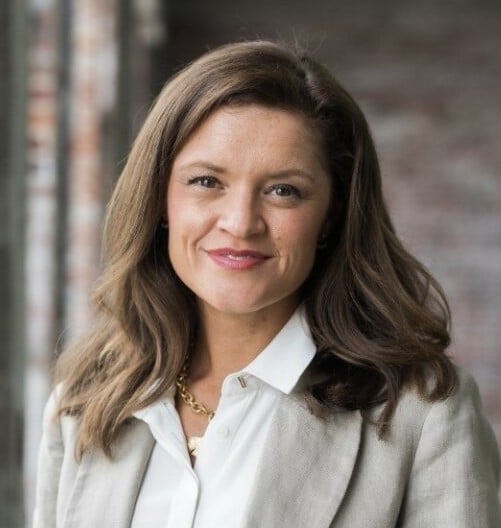
Emily Wykle is regional vice president at gener8tor, a nationally ranked venture capital firm and accelerator. In her role, Wykle oversees gener8tor’s operations in the Southern market, with a specific focus on Alabama. More than 300 companies in Alabama have actively participated in gener8tor’s accelerator programs, resulting in an impressive achievement of nearly $150 million in capital raised, the creation of 1,200 new Alabama jobs and $200 million in statewide economic impact.
David Sher is the founder and publisher of ComebackTown. He’s past Chairman of the Birmingham Regional Chamber of Commerce (BBA), Operation New Birmingham (REV Birmingham), and the City Action Partnership (CAP).
5 thoughts on “The Myth That’s Been Holding Birmingham and Alabama Back — Why It’s Finally Dying”
I believe Birmingham is a wonderful place to live and work. I understand why startups would want to locate here. But one problem is that while Alabama is a pretty good place for business development, the rewards of the economy are not spread out very evenly. One YouTuber made a video saying Birmingham is “the most divided city in the South.” There are really prosperous parts of it and others that are super depressed. I recently saw a video of a man walking through an upscale part of Seattle. A commenter said there were “dilapidated” houses there. I said, “you have a pretty low threshold of dilapidation. Come to Birmingham where you see houses that have lost their roofs, and there’s nobody who can fix them.” I think this is a problem with Alabama government. It doesn’t allow cities like Birmingham to increase their minimum wages when it’s expensive to live here. And it doesn’t fund public transit. Apparently they want people to struggle to buy cars they can’t afford.
Gosh I’m sorry if I chilled discussion by what I said here. I think this is a good article about Birmingham’s potential. But I just think there needs to be an effort to make more people benefit from the prosperity.
I have several questions for Ms.Wykle, as I don’t understand such venture capital funds. Are these funds legally or, from the perspective of their fiduciary obligations, required to invest in projects that promise the highest returns that a reasonable investor would expect? Are such returns specified in the funds’ charters? What if the strongest returns derived from projects in Huntsville—or Nashville or Austin—not Birmingham? Is Nyad a unicorn? Can you tell us about projects they’ve funded outside Birmingham?
Just because the funds are located in Birmingham, I assume they aren’t obligated to only invest there. (Your column references the entire state of Alabama.) I also assume that the law, or at least political calculations, means the funds aren’t allowed to invest in support of specific geographical areas or—heaven forbid—minority projects. Even if those might be of greatest benefit to the citizens of the City of Birmingham.
Thank you for your commitment to Birmingham and the state, and thanks for helping us understand the role of venture capital.
James, I think you’re too hard on Emily. Yes, she doesn’t answer all the questions about how this venture capitalism will benefit the people of Birmingham and the whole region. But she’s not a sociologist. She’s a business person. There is a quote by Charles Sanders Peirce (1839-1914) that I love. I think a lot of people have appreciated it:
“If we endeavor to form our conceptions upon history and life, we remark three classes of men. The first consists of those for whom the chief thing is the qualities of feelings. These men create art. The second consists of the practical men, who carry on the business of the world. They respect nothing but power, and respect power only so far as it is exercised. The third class consists of men to whom nothing seems great but reason. If force interests them, it is not in its exertion, but in that it has a reason and a law. For men of the first class, nature is a picture; for men of the second class, it is an opportunity; for men of the third class, it is a cosmos, so admirable [interesting], that to penetrate to its ways seems to them the only thing that makes life worth living.”
I should say a couple of things about the passage. First, of course today we’d replace “men” with “people.” Also, his use of the word “admirable” near the end is a term in his philosophy that would take time to explain. “Interesting” conveys his idea better.
But clearly, Emily belongs to group two, so the biggest thing for her is opportunity. How can people get together to make things happen? Notice Peirce says the practical person “respects nothing but power.” What that really means is the ability get things done. I said I didn’t think she is a sociologist. A sociologist wouldn’t be very interested in getting things done. A sociologist is more into the REASONS to do things. The question is: can Emily and her company gener8tor help Birmingham-area businesses to succeed? The question of how the fruits of success will be shared is a somewhat separate question. As I said above, I think it is very important.






I believe Birmingham is a wonderful place to live and work. I understand why startups would want to locate here. But one problem is that while Alabama is a pretty good place for business development, the rewards of the economy are not spread out very evenly. One YouTuber made a video saying Birmingham is “the most divided city in the South.” There are really prosperous parts of it and others that are super depressed. I recently saw a video of a man walking through an upscale part of Seattle. A commenter said there were “dilapidated” houses there. I said, “you have a pretty low threshold of dilapidation. Come to Birmingham where you see houses that have lost their roofs, and there’s nobody who can fix them.” I think this is a problem with Alabama government. It doesn’t allow cities like Birmingham to increase their minimum wages when it’s expensive to live here. And it doesn’t fund public transit. Apparently they want people to struggle to buy cars they can’t afford.
Gosh I’m sorry if I chilled discussion by what I said here. I think this is a good article about Birmingham’s potential. But I just think there needs to be an effort to make more people benefit from the prosperity.
Here’s that video about the most divided city in the South.
https://www.youtube.com/watch?v=HYn_UZRHDQA&t=279s
I have several questions for Ms.Wykle, as I don’t understand such venture capital funds. Are these funds legally or, from the perspective of their fiduciary obligations, required to invest in projects that promise the highest returns that a reasonable investor would expect? Are such returns specified in the funds’ charters? What if the strongest returns derived from projects in Huntsville—or Nashville or Austin—not Birmingham? Is Nyad a unicorn? Can you tell us about projects they’ve funded outside Birmingham?
Just because the funds are located in Birmingham, I assume they aren’t obligated to only invest there. (Your column references the entire state of Alabama.) I also assume that the law, or at least political calculations, means the funds aren’t allowed to invest in support of specific geographical areas or—heaven forbid—minority projects. Even if those might be of greatest benefit to the citizens of the City of Birmingham.
Thank you for your commitment to Birmingham and the state, and thanks for helping us understand the role of venture capital.
James, I think you’re too hard on Emily. Yes, she doesn’t answer all the questions about how this venture capitalism will benefit the people of Birmingham and the whole region. But she’s not a sociologist. She’s a business person. There is a quote by Charles Sanders Peirce (1839-1914) that I love. I think a lot of people have appreciated it:
“If we endeavor to form our conceptions upon history and life, we remark three classes of men. The first consists of those for whom the chief thing is the qualities of feelings. These men create art. The second consists of the practical men, who carry on the business of the world. They respect nothing but power, and respect power only so far as it is exercised. The third class consists of men to whom nothing seems great but reason. If force interests them, it is not in its exertion, but in that it has a reason and a law. For men of the first class, nature is a picture; for men of the second class, it is an opportunity; for men of the third class, it is a cosmos, so admirable [interesting], that to penetrate to its ways seems to them the only thing that makes life worth living.”
I should say a couple of things about the passage. First, of course today we’d replace “men” with “people.” Also, his use of the word “admirable” near the end is a term in his philosophy that would take time to explain. “Interesting” conveys his idea better.
But clearly, Emily belongs to group two, so the biggest thing for her is opportunity. How can people get together to make things happen? Notice Peirce says the practical person “respects nothing but power.” What that really means is the ability get things done. I said I didn’t think she is a sociologist. A sociologist wouldn’t be very interested in getting things done. A sociologist is more into the REASONS to do things. The question is: can Emily and her company gener8tor help Birmingham-area businesses to succeed? The question of how the fruits of success will be shared is a somewhat separate question. As I said above, I think it is very important.